Category Archives: WRC News

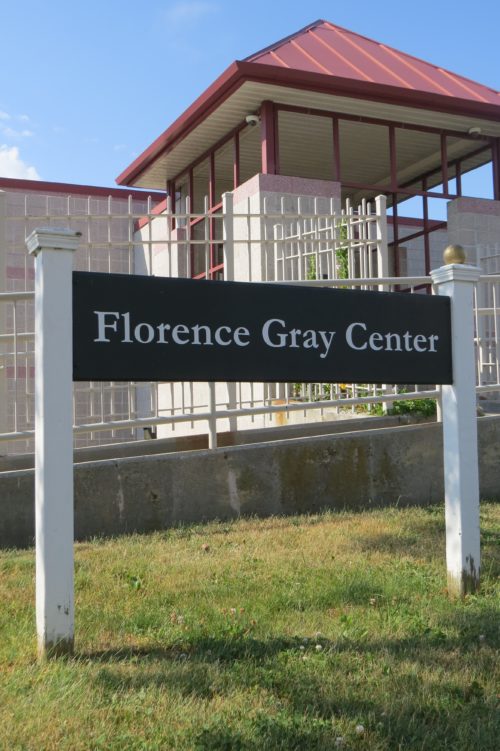
The Florence Gray Center is Up and Running

Residents of Newport’s North End neighborhood have a new place to go for their health and wellness needs as well as to meet their neighbors and socialize. The Florence Gray Center wellness hub, at 1 York Street, is now officially operating under the Newport Health Equity Zone (HEZ) initiative.

The Florence Gray Center (FGC) wellness hub will serve the North End in much the same way that the Dr. Martin Luther King Jr. Community Center (MLKCC) wellness hub at 20 Dr. Marcus Wheatland Boulevard functions in the city’s Broadway neighborhood. The wellness hubs at both facilities offer free programs, services and activities to community members of all ages. An open house was held at Florence Gray earlier this month to introduce the new meeting space to local residents. The event was well attended and captured by Channel 10 news.

The Women’s Resource Center, serving Newport and Bristol Counties, is the sponsor agency of the Newport HEZ program. Olivia Kachingwe, project coordinator for the Newport HEZ program, said that having a second wellness hub in the city is important because it will provide residents of the North End with better access to the programs and activities planned by the HEZ program. “We found in our needs assessment that transportation is an issue for many residents, so we are pleased to have a second wellness hub in the city. It is important to us that our activities are equally accessible to both communities that make up the Newport HEZ. My hope is that both locations are thriving and vibrant,” she said.

Both the FGC and MLKCC wellness hubs offer a wide range of programs, classes and activities under the Newport HEZ initiative. While the impetus for all of the programs is to foster healthier lifestyles for residents and prevent disease, the specific offerings reflect the input and direction of community residents. Classes range from diabetes prevention and yoga to basketball clinics and a senior citizens’ walking group.

Olivia notes that hub offerings are on a two to three month cycle. This ensures variety and allows them to reach a larger, more diverse audience. Moreover, programs are funded through a mini-grant process advertised in the community. This allows for residents to develop an idea, apply for funds, and implement a program. “It is important to the HEZ collaborative that residents themselves feel empowered and are supported to make community change. They are meeting the needs that the community identified, and are providing programs by themselves, for themselves,” says Olivia.

In addition to resident-driven programs funded through a community bid process, the wellness hubs also offer evidence-based programs such as the Diabetes Prevention Program. Residents of the Newport HEZ have been trained by the Rhode Island Department of Health to facilitate these classes.

In addition to the structured programs, Olivia says the Florence Gray Center, like its counterpart at the MLKCC, can be used as community meeting space upon request. The collaborative already holds monthly meetings in the wellness hubs and they would like to provide the opportunity to others. “If a group or individual would like to hold a book club for example, but just needs a space, we would love to host it. Ultimately, we would like for the spaces to feel like they belong to HEZ as much as they are the community’s,” says Olivia.
 

Spotlight on Jessica Walsh

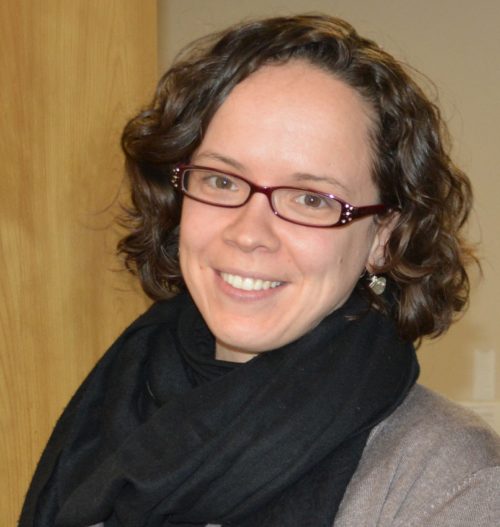
Tackling the all-important issue of domestic violence prevention is a complex task, and Jessica Walsh has been leading the effort at Women’s Resource Center (WRC) for the past 13 years.

As director of prevention, Jessica is tasked with making sure that her team stays focused on the main vision – eliminating domestic violence – and that all projects effectively reach their target audience and maintain a forward momentum.

Finding the best way to hold that vision is a bit like “building the ship while sailing it,” explains Jessica. “There is no map, because we are the ones creating it for others. So the vision is really important, as it ensures our whole team is moving in the same general direction.”

Jessica says her role keeps her busy and that each day is different. “I might facilitate a meeting in the community, manage the budget, supervise staff, paint a wall, or write a grant.”  She studied sociology and communications at the University of Rhode Island, where she became involved with the Center for Nonviolence and Peace Studies. There, she worked with Dr. Bernard Lafayette, a leader in the Civil Rights movement. “Learning about Kingian Nonviolence was a turning point for me; it shaped how I approach my work at the WRC, both philosophically and methodologically,” she says.

Jessica notes that doing innovative prevention work can be both highly satisfying and extremely frustrating. “It is satisfying to know that we are contributing in a very direct, concrete way to the national dialogue on domestic violence prevention. Our projects feel like complex puzzles that we have to try to untangle. That is basically our job.”

On a personal note, Jessica grew up in Exeter, R.I., where she lives with her husband, Ben, and her two children.

To unwind, Jessica says that lately she has been “binge-watching The West Wing. When I’m less sleep deprived I love to read, cook, and go for hikes.”

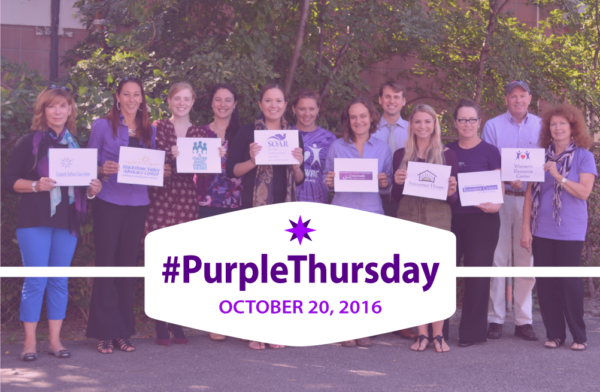
Why Purple for DVAM?

Purple has long been associated with military bravery and royalty (and was famously favored by a Princely musician). But why has it become the color of Domestic Violence Awareness Month?

The internet provides a few different answers, but according to an article on DomesticShelters.org, the decision to use purple to symbolize the cause of domestic violence can be traced back to the early 1900s. Rose M. Garrity, president of the National Coalition Against Domestic Violence (NCADV), said the women’s suffrage movement utilized purple, white and gold because those were the colors of the National Women’s Party. She said these colors originated in England and symbolized “purity, hope and loyalty.”

Flashing forward to July 9, 1978, nearly 100,000 advocates of equal rights for women marched in Washington, D.C., many dressed in lavender. In October 1981, the NCADV observed a “Day of Unity,” and a majority of participants also chose to wear lavender or purple.

The Day of Unity later turned into a week of activities held at local, state and national levels. In October 1987, the first Domestic Violence Awareness Month was observed, and again, purple-hued clothing was widely embraced by participants.

This progression of events helped solidify the adoption of purple for marketing and promotional purposes by domestic violence shelters and advocacy organizations. “There’s a lot of use of the color in the movement and people know what it means,” Garrity said.

Garrity noted, “Battered women chose purple as an evolution of the lavender from decades past. It’s seen as a color of royalty and is already associated with females anyway. As the battered women’s movement grew, we designated October as DV awareness month where we shine a purple light to show support of DV survivors.”

While October is associated with the color pink to symbolize the fight against breast cancer, it is also now widely recognized by domestic violence prevention agencies and support organizations as the month of purple.

As a representative from the NCADV recently observed, “October can handle both pink and purple.”

SPOTLIGHT ON Susan Alexander

Breaking free of domestic violence often requires the victim to be involved in the judicial system. Since this can be an intimidating experience, Women’s Resource Center offers the services of a court advocate. One of WRC’s longest serving advocates is Susan Alexander.

Susan worked for 20 years as a registered nurse. In 2007, she returned to college, completing an associate’s degree in paralegal studies. She is currently enrolled at Roger Williams University where she is continuing her education in this field along with healthcare administration.

Susan arrived at WRC in 2009 as an intern and stayed on. “My intent was to find the opportunity that would give me hands-on experience in the judicial process while also allowing me to give back to the community at the same time,” she says.

The court advocacy program is designed to help victims navigate through the court system by providing support, education, and referrals. Advocates are available in the courthouse every day, where they work with court personnel, judges, attorneys, police departments, probation, and the attorney general’s office on behalf of the victim. They also assist with restraining order applications.

“As every case is different and every person has their own individual circumstances, each client must be respected as to where they find themselves in their own experience,” Susan states. “As advocates, we help them identify their own strengths and assure them that they are not alone.”

When not serving victims of domestic violence, Susan can be found in her garden, delving into a good novel, working out at the gym, or spending time with her family.